Keeping trees healthy, safe, and attractive requires more than occasional maintenance. Understanding tree pruning vs. tree trimming helps property owners choose the right service for their landscape, whether they want to remove damaged branches, encourage healthy growth, improve a tree’s appearance, or prevent limbs from interfering with nearby structures. Although these terms are often used interchangeably, each describes a different approach to tree care. Knowing what separates them can help you protect your trees and make informed decisions about maintaining your property.
What Is Tree Pruning?
Tree pruning is the selective removal of specific branches to improve a tree’s health, structure, safety, or long-term development. Rather than focusing primarily on appearance, pruning addresses the tree’s condition and how its branches grow in relation to one another.
Professional pruning involves evaluating the tree before making cuts. The goal is to remove problem branches while preserving as much healthy growth as possible.
Common Reasons for Tree Pruning
Tree pruning may be necessary when a tree has structural problems, damaged limbs, or branches that could pose a safety concern. Common reasons include:
- Removing dead or diseased branches: Deadwood and damaged limbs can become hazards, while diseased branches may need removal to limit the spread of certain problems.
- Improving branch structure: Removing selected branches can reduce competition between stems and encourage a stronger growth pattern.
- Addressing crossing branches: Branches that rub against one another can damage bark and create opportunities for decay.
- Reducing potential hazards: Removing weak, broken, or poorly attached branches may help reduce the risk of branch failure.
- Supporting young tree development: Structural pruning can help establish a balanced framework as a tree matures.
According to Penn State Extension, pruning objectives include improving tree structure, managing health and safety, and maintaining the tree’s natural form. These goals highlight why proper pruning requires careful assessment rather than indiscriminate cutting.
What Is Tree Trimming?
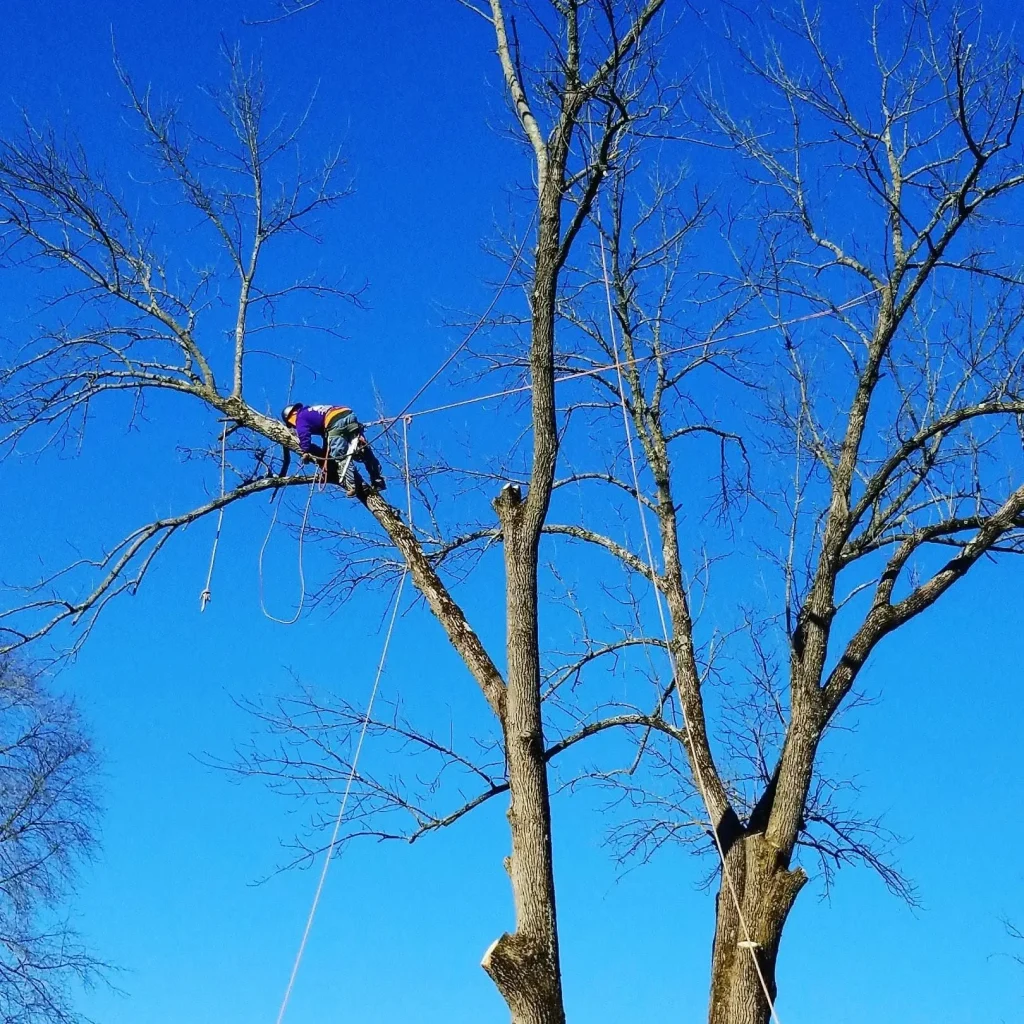
Tree trimming generally focuses on managing a tree’s size, shape, and appearance. It can help maintain a neat landscape, improve clearance around buildings, and prevent branches from interfering with driveways, walkways, or other areas of the property.
Although trimming can also support safety and practical maintenance, the term is commonly associated with controlling overgrowth and maintaining the desired appearance of trees and shrubs.
Common Reasons for Tree Trimming
Property owners may schedule tree trimming to address several landscaping needs, including:
- Maintaining an attractive shape: Selective trimming helps trees and ornamental plants complement the surrounding landscape.
- Managing overgrowth: Branches extending into walkways, driveways, or outdoor living areas may need attention.
- Improving clearance: Appropriate cuts can help maintain space around buildings, signs, and other structures.
- Maintaining landscape consistency: Regular maintenance can help trees and shrubs fit the overall design of the property.
- Controlling unwanted growth: Selective trimming may help manage branches growing into areas where they are not wanted.
However, trimming should never mean cutting branches without considering the tree’s health. Even when appearance is the primary concern, the work should use appropriate pruning techniques and avoid excessive removal of healthy foliage.
Tree Pruning vs. Tree Trimming: The Main Differences
The most important distinction between tree pruning and tree trimming is the objective of the work. Pruning typically prioritizes tree health, structural development, and risk management, while trimming often emphasizes appearance, size, and clearance.
| Feature | Tree Pruning | Tree Trimming |
| Primary purpose | Improve health, structure, and safety | Maintain shape, appearance, and clearance |
| Typical work | Removing dead, diseased, damaged, or poorly positioned branches | Managing overgrowth and selectively shaping the canopy |
| Main consideration | The tree’s condition and long-term development | The desired appearance and practical use of the surrounding space |
| Common application | Correcting structural problems or removing damaged limbs | Maintaining an attractive landscape and clear access areas |
| Professional approach | Targeted cuts based on tree biology and structure | Controlled cuts that preserve tree health while meeting maintenance goals |
These categories overlap. For example, removing a branch that extends over a roof may improve clearance while also reducing a potential hazard. A qualified tree care professional can determine which techniques best address the situation.
When Should You Choose Tree Pruning?
Tree pruning is often the better choice when the tree has a specific health, structural, or safety concern. A professional assessment can help identify which branches should be removed and which should remain.
Consider scheduling pruning if you notice:
- Dead branches or limbs that have been damaged by storms.
- Branches rubbing against one another.
- Unbalanced growth or competing main stems.
- Signs of decay, unusual branch dieback, or other possible health problems.
- Heavy limbs with questionable attachments above areas where people gather.
Pruning is also valuable during a tree’s early development. Correcting certain structural issues while a tree is young may reduce the need for larger cuts later. However, the appropriate timing and technique depend on the species, its condition, and the reason for pruning.
If a tree has large damaged limbs, significant cracks, or branches near electrical lines, avoid attempting the work yourself. These conditions may require specialized equipment and professional evaluation.
When Is Tree Trimming the Right Choice?
Tree trimming may be appropriate when your trees are healthy overall but need routine maintenance to keep the landscape orderly and functional.
You may benefit from trimming when:
- Branches are beginning to obstruct walkways or driveway access.
- Trees are growing into spaces where clearance needs to be maintained.
- The canopy requires selective shaping to complement the landscape.
- Shrubs or small ornamental trees have become overgrown.
- Regular maintenance is needed to preserve the appearance of your outdoor spaces.
Before work begins, explain your goals clearly. If you want branches kept away from your house, for example, discuss the desired clearance without requesting unnecessary removal of healthy limbs.
A professional should also evaluate whether the requested shape is appropriate for the tree. Removing too much growth simply to achieve a particular appearance can weaken the canopy and encourage undesirable regrowth.
Best Practices for Safe and Healthy Tree Care
Whether you need pruning or trimming, proper technique is essential. Poorly performed cuts can damage living tissue, create unnecessary wounds, and affect the tree’s future growth.
1. Avoid Excessive Branch Removal
Removing too much live foliage can stress a tree and interfere with its ability to produce energy. The appropriate amount varies according to the tree’s age, species, health, and growing conditions. Rather than following a fixed percentage for every tree, a professional should determine how much removal is appropriate for the individual tree.
2. Preserve the Tree’s Natural Structure
Tree care should respect the natural growth pattern of the species. Avoid topping, which involves cutting major branches back to arbitrary lengths or heights. The Tree Care Industry Association identifies topping and excessive interior branch removal, known as lion’s tailing, as unacceptable practices that can injure trees.
3. Use Proper Cutting Techniques
Correct cuts help minimize unnecessary damage. Branches should generally be removed without cutting into the branch collar, the slightly enlarged area where a branch connects to its parent limb. Large branches may require specialized cutting methods to prevent bark tearing.
4. Consider Timing and Tree Species
The best time to prune depends on the species, local climate, and purpose of the work. Some trees benefit from pruning during dormancy, while others require different timing to reduce disease risks or support flowering and fruit production. Storm damage and immediate safety concerns may require attention regardless of the season.
5. Hire a Qualified Tree Care Professional
Large trees, overhead branches, and work near electrical lines can present serious hazards. Look for an experienced tree care provider who can explain the recommended work, identify potential risks, and describe the methods that will be used.
The American National Standards Institute’s ANSI A300 tree care standards provide guidance for professional pruning practices, including objectives, cutting methods, and specifications. Asking whether a provider follows applicable industry standards can help you evaluate the quality of the proposed work.
How Often Should Trees Be Pruned or Trimmed?
There is no universal schedule that works for every tree. Some trees need periodic maintenance, while others require attention only when a specific concern develops.
Factors that influence maintenance frequency include:
- Tree species and natural growth rate.
- Age, size, and overall health.
- Proximity to buildings, walkways, and other structures.
- Previous pruning or trimming work.
- Local weather conditions and storm exposure.
Young trees may benefit from periodic structural assessments as they develop. Mature trees generally require a more conservative approach, with cuts limited to clearly defined objectives. Regular inspections can help identify problems before they require more extensive work.
Rather than scheduling aggressive trimming every year, focus on the tree’s actual needs. A professional can recommend a maintenance plan that balances appearance, safety, and long-term health.
Keep Your Landscape Healthy With the Right Tree Care
Understanding tree pruning vs. tree trimming makes it easier to choose the right service for your property. Pruning addresses specific concerns involving tree health, structure, and safety, while trimming typically focuses on appearance, overgrowth, and maintaining adequate clearance. Both require thoughtful planning and proper cutting techniques to protect the tree and the surrounding landscape.
If your trees have damaged branches, excessive growth, or clearance concerns, contact Flores Tree Service & Landscaping to discuss your tree care needs. A professional evaluation can help determine the appropriate approach for your property, supporting healthier trees, safer outdoor spaces, and a well-maintained landscape throughout Bucks and Montgomery County.